
Calculation method
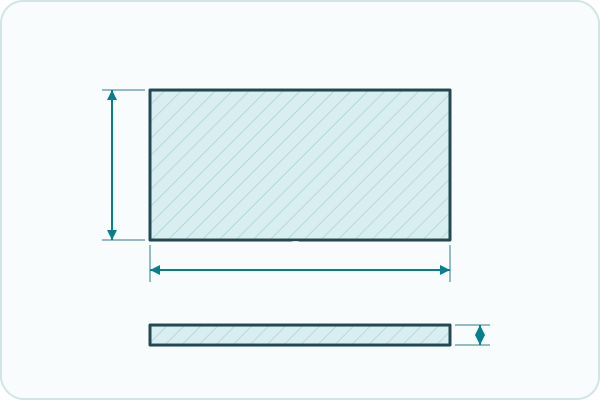
Calculate the theoretical weight of rectangular steel plate from width, length, thickness, density and quantity.
What this calculator helps you check
Read the quantities that matter
- AreaA · m²
- Mass per aream/A · kg/m²
- Mass per piecem · kg
- Total massΣm · kg
Compare dimensions, keep the calculation
Add rows to compare alternatives, switch between metric and imperial units, then copy the results or download a CSV with the input dimensions.
Formula
Width in millimetres and length in metres give area after converting width to metres. Area times thickness in metres gives volume; volume times density gives mass.
m = b × L × t × ρ × 10⁻⁶; Σm = m × nHow to use it
- Use consistent units
Choose the unit system and enter the actual dimensions.
- Dimensions and assumptions
Use net rectangular width, length and thickness, then enter the piece count and steel density.
- Check the result
Review the formula and its assumptions before using the result. Copy or download results with their units and assumptions.
Worked example
Follow one set of dimensions from inputs to calculated results.
Inputs
- Width
- 1,000 mm
- Length
- 2 m
- Wall or plate thickness
- 2 mm
- Density
- 7,850 kg/m³
- Quantity
- 1
Density is an explicit assumption in this example. Use the value appropriate to your material.
Calculation results
- Area
- 2 m²
- Mass per area
- 15.7 kg/m²
- Mass per piece
- 31.4 kg
- Total mass
- 31.4 kg
1000 mm × 2 m × 2 mm at 7850 kg/m³ gives 31.4 kg per plate; ten identical plates give 314 kg.
Limits
This is the mass of a solid rectangular plate. Holes, bevels, cutouts, coatings, edge profiles and thickness variation are not deducted or added.
Frequently asked questions
The single-density model cannot separately account for a coating of different density. Use substrate dimensions for substrate mass and evaluate coating mass separately.
No. The rectangular formula includes the whole rectangle. For cut-outs, subtract their volume multiplied by the same density from the theoretical weight.
Actual thickness and dimensions vary from nominal values, and coatings or other added material may not be included in the calculation.
Continue with a related calculation
Check your own dimensions
Use your actual measurements in the calculator above. Review the units and assumptions before using the result.