
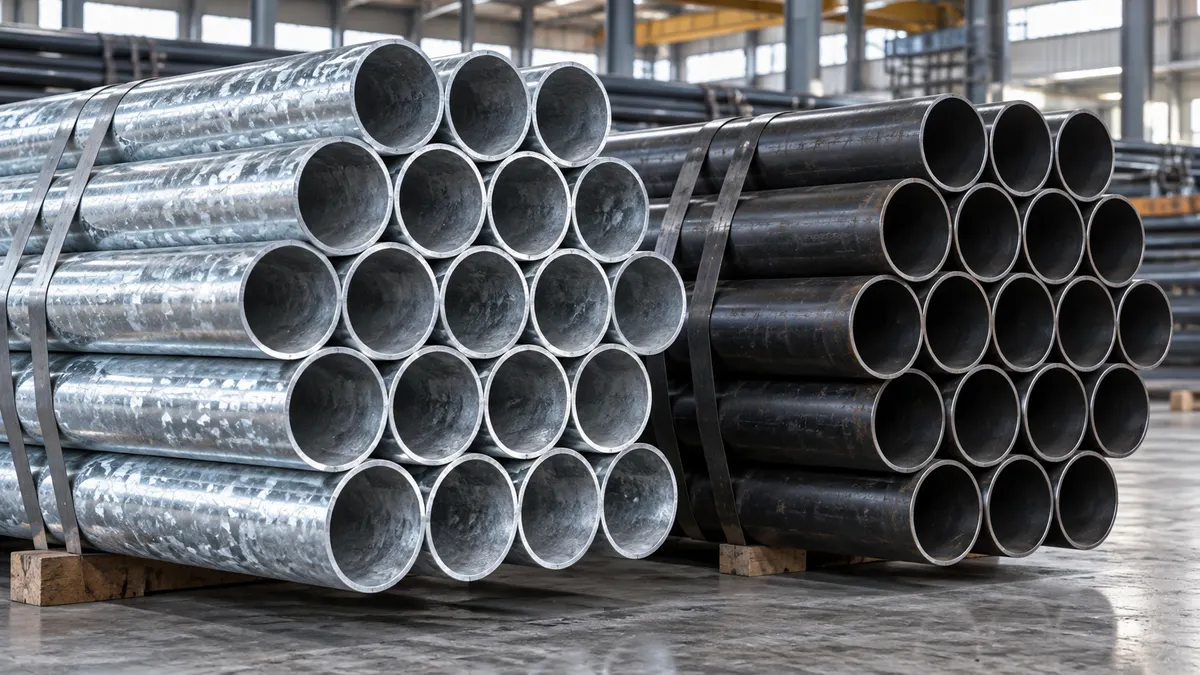
When comparing galvanized steel pipe vs black steel pipe, start with the exposure and the specification on the drawing. The name “black” describes an uncoated pipe surface; “galvanized” identifies a zinc-coated product. Neither term, by itself, identifies the pipe grade, wall schedule, manufacturing method, or suitability for a particular pressure and temperature. Those details belong in the order.
ASTM A53/A53M is one example of a specification whose scope covers both black and hot-dip zinc-coated welded and seamless steel pipe. That common specification makes a useful comparison possible, but a quote must still identify the exact type, grade, dimensions, and edition required. Do not assume that a pipe sold as “galvanized” automatically meets every other A53 requirement.
Compare the ordered products, not just their names
| Buying question | Black pipe | Galvanized pipe |
|---|---|---|
| Surface supplied | No zinc coating is specified by the name | Confirm that the order calls for the required zinc-coated finish and governing specification |
| Exposure | Consider whether the operating environment requires separate coating or corrosion protection | Confirm that the zinc coating and any exposed cut or threaded ends meet project requirements |
| Fabrication | Confirm the intended welding, threading, or painting process | Confirm how coating at welds, threads, and cut ends will be handled after fabrication |
| Inspection | Ask for pipe grade, dimensions, manufacturing method, and required test documents | Ask for the same pipe records plus the coating-related acceptance documents named by the order |
Zinc can protect steel against corrosion in suitable environments, but service life depends on exposure, coating condition, installation, and maintenance. Do not promise a fixed life from the word “galvanized.” If the design specifies another coating system, check whether it is compatible with the delivered surface and fabrication sequence.
Check service conditions first
Ask the engineer or end user whether the pipe will be exposed outdoors, buried, in contact with a particular fluid, or installed in a controlled indoor environment. Also confirm whether the intended service involves pressure, elevated temperature, potable water, or a regulated installation. These conditions may introduce requirements beyond the surface finish. A material that is acceptable for a support frame is not automatically suitable for a pressure line.
For projects where the specification names ASTM A53, request the exact type and grade and clarify welded versus seamless supply. A53 permits more than one manufacturing route; the finish does not settle that choice. If a drawing calls for a different pipe specification, compare that document directly instead of substituting A53 based on appearance.
What should an RFQ say?
Include the following in a single line item or attach a controlled drawing:
- Pipe specification and edition, type, grade, and manufacturing route.
- Nominal pipe size, wall schedule or specified wall thickness, length, and quantity.
- Black or hot-dip zinc-coated finish, plus any project coating requirement.
- End preparation, threading, couplings, and treatment of cut or fabricated areas.
- Inspection, test reports, packaging, destination, and delivery terms.
Compare quotations only after suppliers confirm the same line-item basis. A lower-price black pipe and a galvanized pipe are not equivalent offers if the project requires a protective finish or an additional coating step. Equally, a galvanized pipe is not a substitute for the grade and testing specified by the engineer.
Review available galvanized steel round pipe and ASTM A53 carbon steel pipe, then send the intended service and specification through our steel RFQ guide.
Reference
Turn the material requirement into an RFQ.
Review the product index or send grade, dimensions, quantity, destination and document requirements to the export desk.